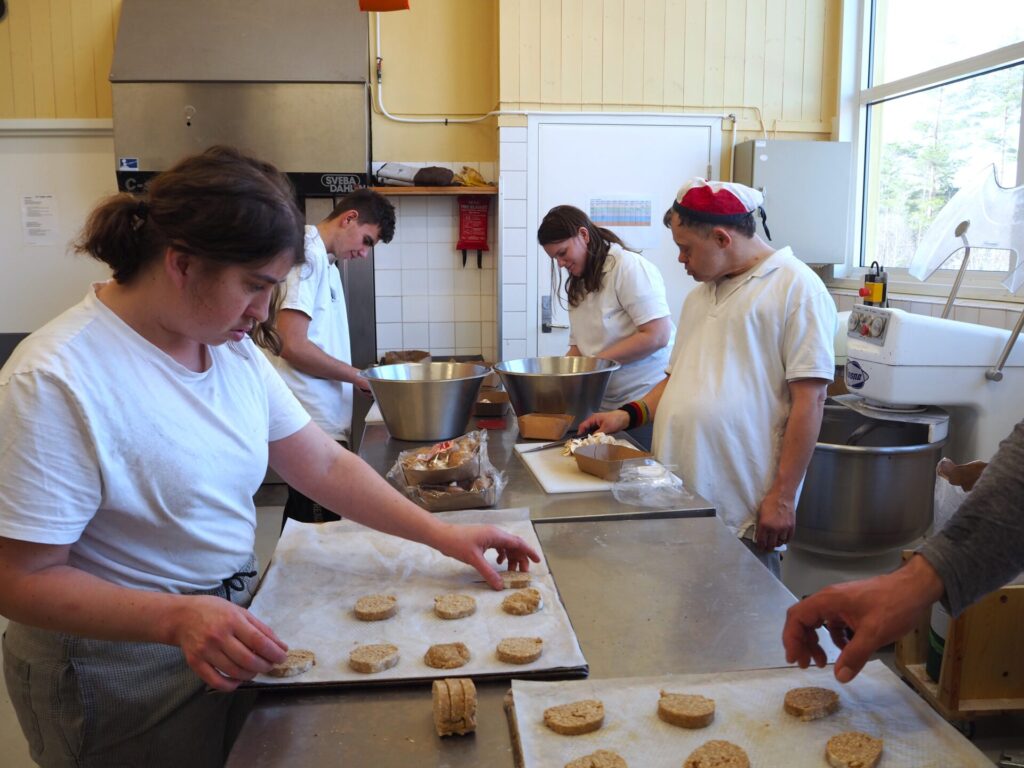




Learning environments in which one becomes more capable in one’s impulse to act
As an individual, every person has their own personal impulse to act throughout their entire life. This manifests itself differently depending on age, development and environment. Yet even though the expression of the impulse to act may appear differently depending on the situation, it never changes.
The impulse to act indicates a direction for personal development. It is like a guiding star. Every person strives to bring the impulse to act, as experienced in the will, into the world.
In the apprenticeship system, there are three stages: apprentice, assistant and master. These stages of training date back to the Middle Ages.
At the start, the apprentice had to do nothing but sweep and clean. Day in, day out, the same routine. The actual work was only entrusted to him over time. If the apprentice had not already been born into his learning environment, he became fully integrated into the work environment during his apprenticeship.
The assistant was on the move. He sought out his own masters. Depending on the skills he could demonstrate, he was accepted or had to move on. He thus chose his own learning environment.
The master craftsman created the space he needed to carry out his work. This naturally took place in conjunction with his clients and the social environment. The master craftsman, in turn, took on apprentices. He focused on passing on his expertise.
The stages of development and the appropriate environment thus went hand in hand.
Whether someone can develop by expressing their impulse to act, whether they can bring their impulse to act into the world and make it available to others, is linked to the (learning) environment. One needs space to practise in order to become more capable in one’s impulse to act. This goes hand in hand with the need to make room to bring other people along by sharing one’s expertise.
The same question 100 times
This approach is also helpful in educational work. For example, there are people who always ask the same question: “What time is it?” This question is repeated constantly. Over and over again. It doesn’t help to try to stop them asking.
These people, too, want to practise and become more capable in their impulse to act. You can empower them to ask other questions and thereby broaden their world. If someone constantly asks, “What time is it?”, you can respond with other questions: “Are there clouds in the sky today?” Here, too, you accept the other person’s impulse to act. You go along with it and in this way, the questioner encounters a master of asking questions. This is a useful practice in a group.