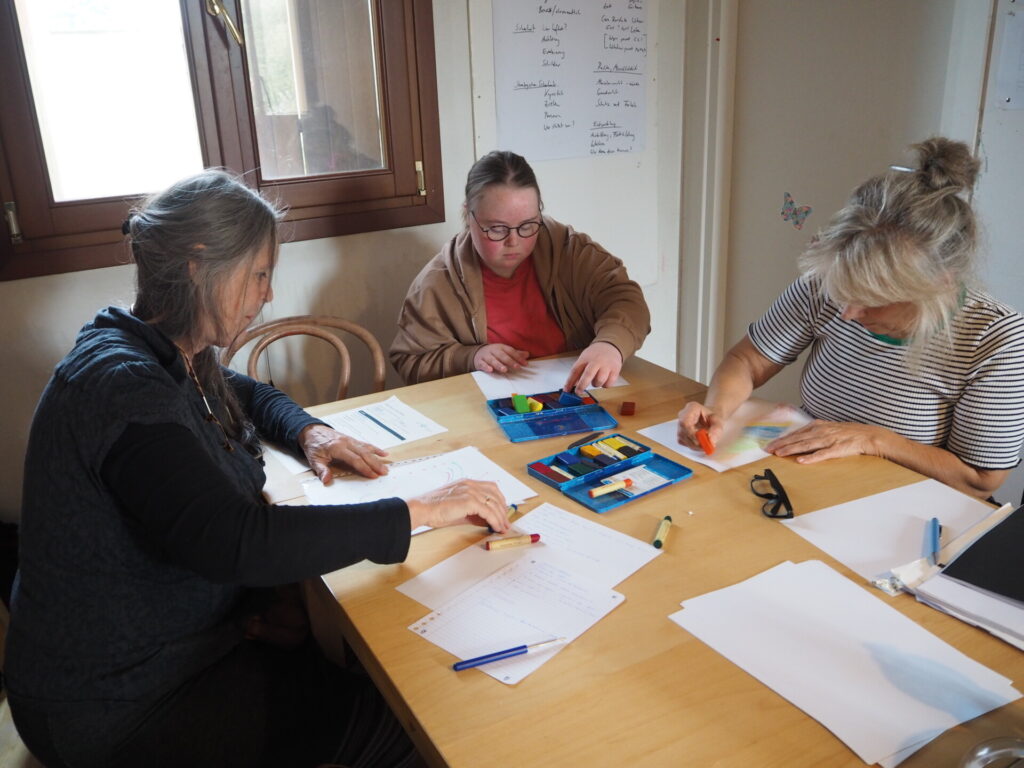




You can express the impulse to act not only with words, but also through drawing or painting. This opens up a new way of communicating about the impulse to act.
Once you have already identified the impulse to act using verbs, the next step is to connect with it artistically. All you need are paper and pens or paints. Now bring the impulse to act to mind once more, visualise it and finally put it down on paper. There are no set rules. It is simply a matter of, quite literally, forming a picture of a person’s impulse to act. If you wish, you can discuss the pictures afterwards. However, this is not strictly necessary. The pictures speak for themselves and require no verbal communication.
‘Aiming while organising’
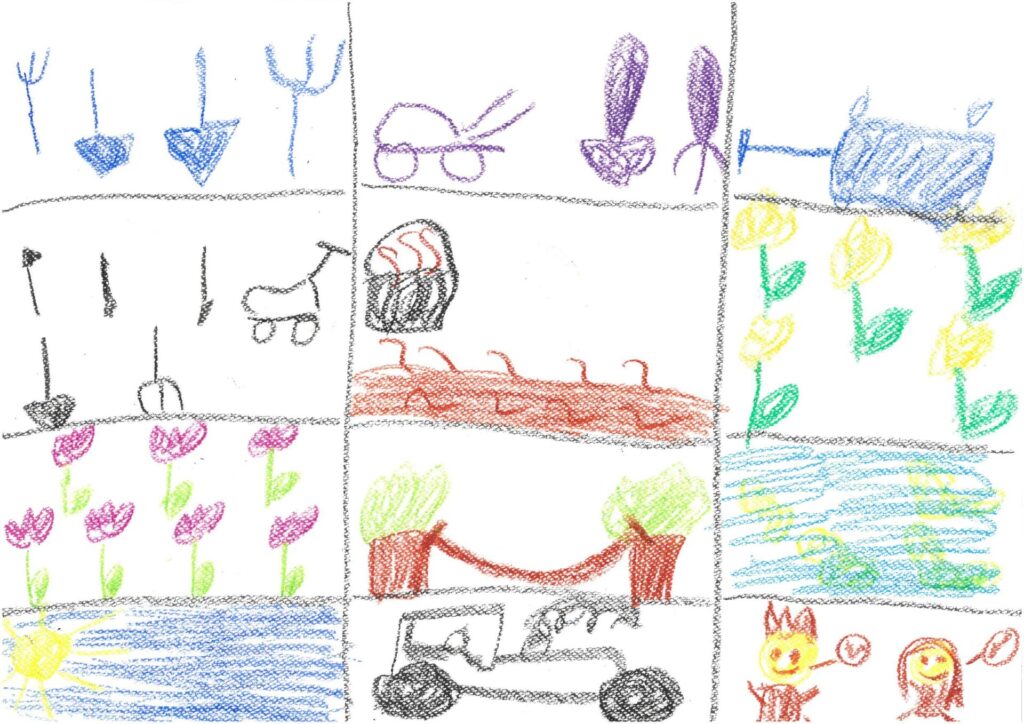
We sit together in a group of six to draw the impulses to act. We always select one impulse to act and then create our own personal drawings based on it. Nadja is first. Her impulse to act is ‘organising goals’. She draws her own impulse for action. Without thinking too long, she draws a grid with 3×4 squares. She assigns a theme to each box: in one, the gardening tools; in another, the flowers; in the third, the earthworms; and so on. When I see the motif of her picture and observe the clarity and purpose with which she draws it, I gain a deeper understanding of what ‘aiming while organising’ means, how it feels, and how it manifests itself.
Her five colleagues have drawn ‘aiming while organising’ as follows:
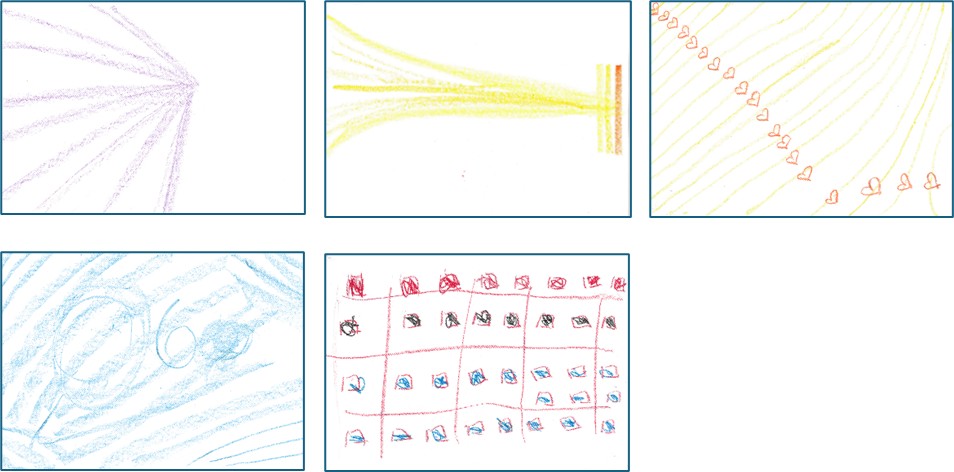
The drawings reveal not only the other person’s impulse to act. They also always reveal the self of the person drawing. More on this in the next window.