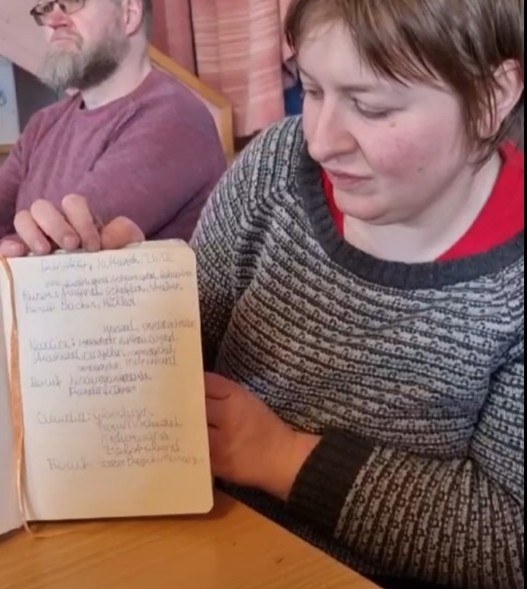




Victoria is going on holiday for a fortnight. She comes to me, her work support mentor , hugs me and bursts into tears. Her tears are unstoppable. In this way of acting, she reveals her impulse to act: ‘holding on while embracing’. I don’t know how I can help her in this situation. I can well imagine how difficult it is for her to leave her familiar surroundings. At the same time, I myself am completely overwhelmed by her impulse to act in this situation. I don’t know how to deal with it. How can I connect with her impulse to act in such a situation?
I bring up the example in the Inclutrain intervision session. The trainer, Albert, suggests looking for the impulse to act, ‘holding on while embracing’, in our own experience. He gives an example from his own childhood: ‘As a child, I was on holiday with my aunt and uncle in a historic town. There, we set off to find souvenirs for my parents and ourselves. A souvenir embodies the concept of ‘holding on while embracing’. You embrace the memory, hold on to it.” Drawing on this experience, Albert aligns to Victoria’s situation: “You could give her a lovely notebook and ask her to write down something every day about what she has experienced, for you and for herself. When she’s back, you can then read the entries together.”
I can imagine that it might work and give it a try – with success! By giving her the notebook and suggesting we read it together after her return, I have embraced Victoria’s impulse of ‘holding on while embracing’. I have accepted her. Through my suggestion, Victoria was able to hold on to what had happened through the notes and, at the same time, embrace it in the notebook.
It is not about Victoria learning to let go – that is not her issue! Rather, it is about her becoming able to bring her impulse to act of ‘holding on while embracing’ into the world in a positive way – for example, by recording her experiences in a notebook.
This example shows how accepting and aligning to another person’s individual impulse to act can open up new possibilities for providing effective support and guidance. In practical terms, this means using challenges as opportunities to create a learning environment in which both trainers and trainees can practise and develop new skills and abilities. This helps people learn to cope better with challenges in their everyday working lives.