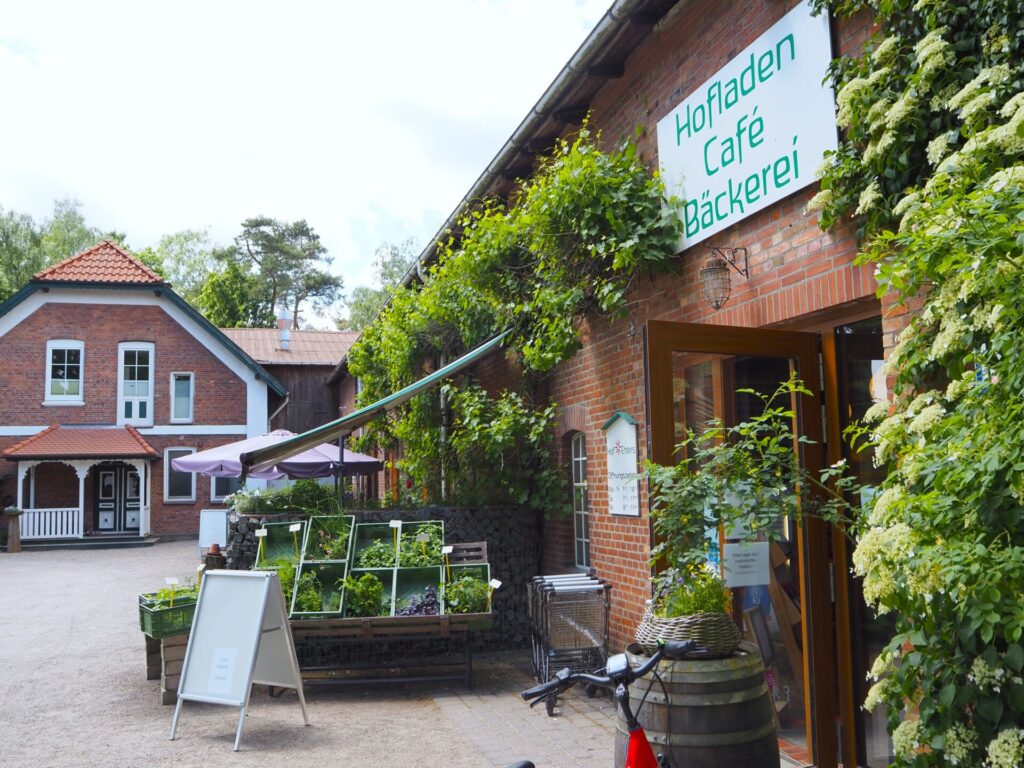



The Weide-Hardebek Farm Community Ltd is a social-therapeutic, non-profit living and working community. Around 100 people, both with and without support needs, live and work on the three farms in the fields of biodynamic vegetable growing and agriculture, as well as animal husbandry, baking, housekeeping, building trades, marketing and sales.
Inclutrain at Weide-Hardebek
Since the start of the Inclutrain project in 2017, the Weide-Hardebek Farm Community has played a leading role in developing new, person-centred forms of vocational training. As part of the project, the newly developed methods and approaches from Weide-Hardebek have been tested in practice on several occasions, for example during international training activities.
Activities 2023–2026
In the Inclutrain extends project (2023–2026), Weide-Hardebek aimed to deepen the methodological knowledge of staff and clients and to embed the new approaches within the organisation. Weide-Hardebek took part in five training activities in Austria, Germany, Norway and the Netherlands. In total, 18 people with and without support needs from Weide-Hardebek took part in training activities on one or more occasions. Staff from the organisation also attended process group meetings to deepen their methodological knowledge and practical skills and to be able to pass on their knowledge to colleagues.
Collaboration between staff and clients
Staff members who work with the Inclutrain methods report a change in their attitude towards working with clients. Instead of focusing on deficits in difficult situations, a perspective has now been established that prioritises individual abilities and qualities. This has led to conflict situations increasingly being handled in such a way that solutions are not immediately imposed, but rather a step back is taken first to calmly assess the situation. Staff describe this as positive personal development.
In practice, this means that staff are increasingly able to step back, wait and see, and perceive what clients actually need at any given moment. This approach fosters respectful and personalised care and support.
Exchange platforms
It was found that clients in particular enjoy using the Moodle platform to stay informed about the Inclutrain project and to share their own experiences with other participants. Staff, on the other hand, rarely use the platform. They tend to view writing Moodle posts as an additional burden on top of their other documentation work, which cannot be done during regular working hours.
Institutional implementation
Despite the positive experiences at an individual level, it is evident that establishing the new methods at an institutional level still presents challenges. One of the staff members notes that it is difficult to implement the new methods across the entire organisation, particularly in his specific role as a baker. So far, the development has been driven primarily by individuals within the company and is not regarded as a formalised component of the organisation as a whole. It is evident that the methods can only be integrated throughout the organisation if management actively drives their implementation. In the long term, the training manager at Weide-Hardebek is expected to promote the methods within the company. He has acquired methodological knowledge and experience during the course of the Inclutrain project. It is anticipated that, through him, the methods can be more firmly embedded throughout the organisation.
One step towards institutional implementation would be to embed the portfolios into the development reports. This would require all staff to compile portfolios describing the clients’ qualities and to develop care approaches based on the clients’ own initiatives.
Implementation in the Famit training
Famit is a supplementary social therapy qualification for specialists in community-based education and participation, which staff members of residential and working communities can undertake alongside their jobs. The training is offered by the certified training provider Weide-Hardebek. An important aspect of the long-term implementation of the methods within the Weide-Hardebek organisation is the integration of an Inclutrain training module into the Famit training programme. As part of the Inclutrain project (2023–2026), two training modules were delivered at Weide-Hardebek and subsequently evaluated.
Conclusion and outlook
In summary, it can be said that the new approaches and methods used in working with clients are already bringing about positive changes. Staff have developed a new perspective in their interactions with clients, leading to person-centred support in both work and everyday life. Nevertheless, challenges remain regarding institutional establishment. However, as long as the positive results in working with clients remain evident, it is expected that the methods will become an integral part of the organisation in the long term.