



Everything in the world has a will. Even the chair
The chair has the gesture of ‘carrying while embracing’. What makes the chair a chair is the activity that the chair performs, even though it stands still. One only notices this when one actively enters into a relationship with the chair by sitting on it.
If one tries to think about the essence of an object, one asks: ‘What does this object do when it is in use?’ Here are a few examples:
Spoon | ‘ separating while lifting’, ‘ transporting while lifting’, ‘ handing over while reaching’ |
Fork | ‘ removing while selecting’ |
Knife | ‘ separating while cutting’ |
Box | ‘ setting aside while concealing’ |
Let us take the example of the spoon. Whether one uses it to scoop soup from a pot, to eat, to stir coffee, to pour sauce, or to dig a hole, the essence of the spoon remains the same, even if the spoon’s form and material may differ. In different situations or during different activities, the idea of the spoon can manifest itself in very different ways and the essential characteristics then appear in a specific shape, size, colour, or material.
One also gains a better understanding of the concept of a spoon by comparing it with other related objects, such as a fork or a stirring rod.
The nature of the object and the human impulse to act
Every spoon has the same essence. No matter how it is shaped or what material it is made of, it is always the same idea. Human beings, on the other hand, have their own impulse to act, which is revealed in the way they act. The essence of the object is not individual, but the human impulse to act is.
Exercise to identify the impulse to act
Exploring the essence of objects in small groups fosters creativity and flexibility in using action-impulse verbs.
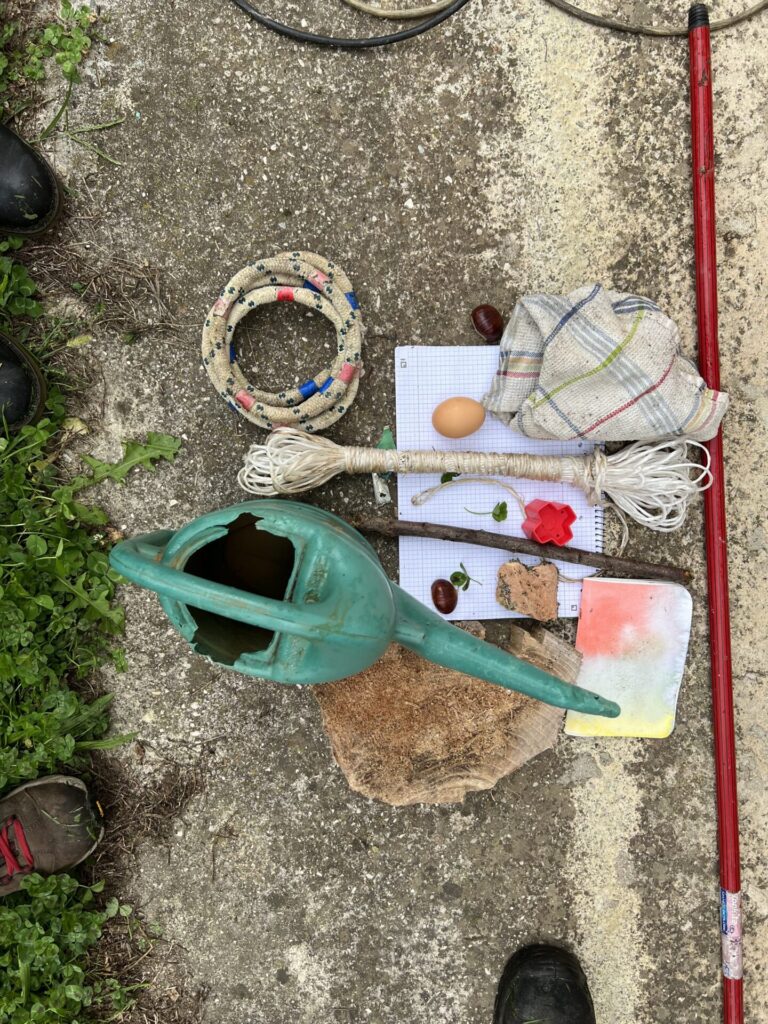
To do this, work in groups of 2–3 people for about 15 minutes to identify the impulse to act in 5–10 objects in the room.