



How conference work can inspire and encourage action.
Team meetings can be redesigned if the focus is shifted from the ‘what’ to the ‘how someone does something’. In the ‘how’, we look over the other person’s shoulder, step into their shoes, experience their impulse to act and can move along with their intentions.
Part of the process involves:
- looking over the shoulder of the person raising an issue,
- concluding an agenda item when the person raising it says he or she can now move on with it,
- accepting that decisions are generally made on an individual basis, mostly whilst working, unexpectedly and in response to the situation,
- limiting one-way information sharing during team meetings to what is strictly necessary.
For every agenda item, the focus should be on what has not yet been understood and on personal questions. What has already been understood is clear anyway and requires no detailed discussion!
Aligning and keeping each other informed
You know the scope within which you can act if you align your planned action with colleagues in advance. This allows you to see the consequences for others’ work. Part of this aligning involves letting colleagues know afterwards what you actually did, whether things turned out differently from expected, what caused the deviation in the situation, what effects the actions had, and what you learnt from it.
Colleagues can then get involved and, if necessary, even lend a hand.
Information can be exchanged via email or text message. The person providing the information should set a deadline by which they would like to receive feedback. If a suggestion or objection cannot be resolved via email or text message, it becomes an agenda item for the next team meeting. Any information that does not stem from personal activities does not belong in the team meeting and should be communicated via email, text message, notice board or in conversation.
Structure for drawing up an agenda:
Who is involved in the item (presenter)? There is no agenda item without a name.
The presenter is the person responsible for the project and process for that item. The chair asks the project lead to describe the situation and state which questions they would like answered. This ensures that only matters that are specific and current to the presenter are discussed.
Objectives for the presenter include, for example:
- to obtain advice or support,
- to discuss/coordinate an activity with colleagues,
- to share information with one another,
- to practise something together
Items that have not been addressed do not automatically appear on the next agenda. A discussion is concluded when the presenter indicates that she or he has made progress with their issue or can move on.
What is the aim of the item (objectives)?
They want to hear what their colleagues think of the matter, what suggestions for improvement they have, and whether they have any complaints or objections.
If there are suggestions for improvement or concerns, colleagues are encouraged to make their objections clear and to put forward suggestions as to what an alternative might look like.
The effective question is: “Can you now move forward in concrete terms with the suggestions, ideas and proposals from your colleagues?” The question thus shifts the focus back from the group to the person who raised the issue. It is motivating and inspiring for everyone when the person who raised the issue signals: “Yes, I can move forward.”
Asking, “Does everyone agree with this?” addresses an abstract judgement or opinion. This is not productive. Meetings in which opinions, judgements, and thus reason, are the primary focus usually lead to discussions, a sense of ‘having to have a say’ and a ‘competition’ between individual viewpoints. They are time-consuming, exhausting and tiring, and it is often the case that the decisions made do not translate into action. In such meetings, there is usually not enough time to cover all the points, which leads to dissatisfaction.
How much time should be allocated for this item?
A shared sense of time develops when every participant has an overview of the agenda right from the start. The chair repeatedly appeals to this shared sense of time: “We are now halfway through”, “We have 20 minutes left”, etc. In doing so, he or she brings the end of the meeting into everyone’s awareness. Everyone can refer to this end point and assess how important it is for her or him to speak now. These conferences therefore usually end on time. Every participant realises that they have control over the proceedings and can contribute to their success. This has an uplifting and refreshing effect.
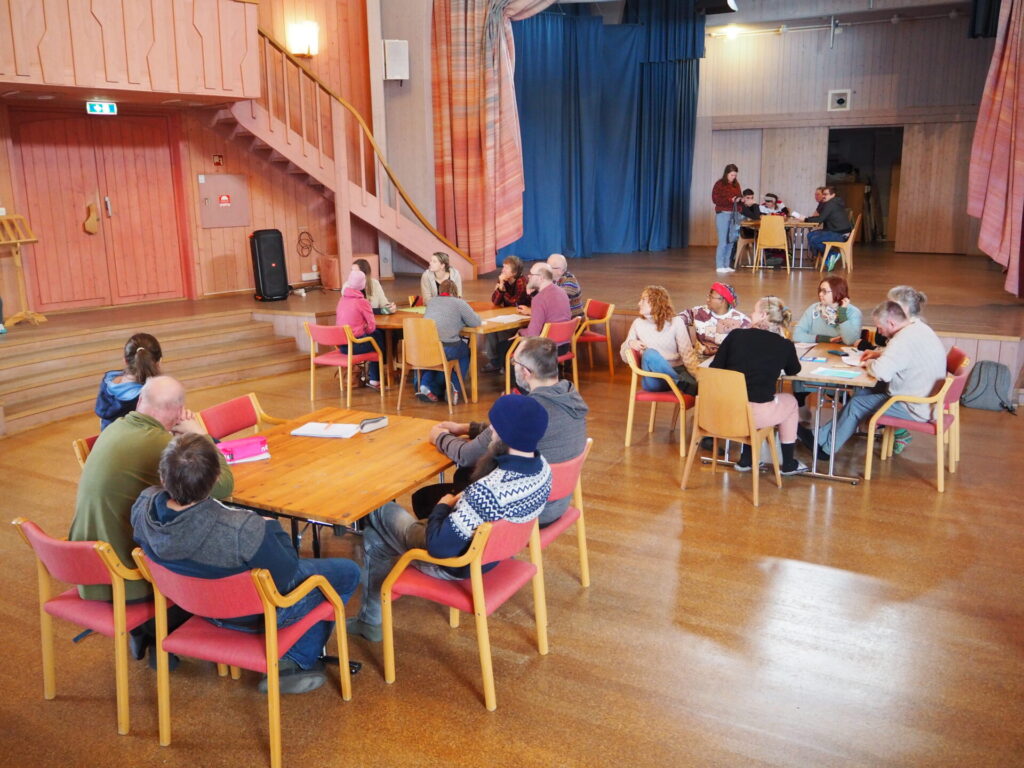
Workshops
It is stimulating, motivating and inspiring when part of the conference time is spent working independently in smaller groups (workshops). There is no need to present the results afterwards; this should only be done if it seems appropriate. The aim is for individuals to be able to continue working, rather than the large plenary session. This is because a joint discussion can quickly take on the weight of a decision-making meeting: “Is everyone in agreement?”. Even with smaller teams, it is effective to work in groups of two or three.